3.10.2006

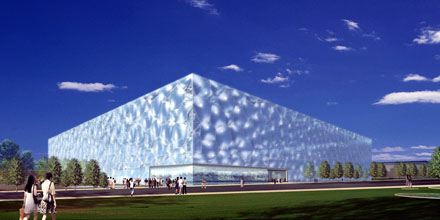
Arch @ National Swimming Center, Beijing


PTW and Ove Arup. Under construction, completion scheduled for 2008

The striking exterior of the National Swimming Center, being constructed for the 2008 Olympic Games and nicknamed, the "Water Cube," is made from panels of a lightweight form of Teflon that transforms the building into an energy-efficient greenhouse-like environment. Solar energy will also be used to heat the swimming pools, which are designed to reuse double-filtered, backwashed pool water that's usually dumped as waste.

Excess rainwater will also be collected and stored in subterranean tanks and used to fill the pools. The complex engineering system of curvy steel frames that form the structure of the bubble-like skin are based on research into the structural properties of soap bubbles by two physicists at Dublin's Trinity College. The unique structure is designed to help the building withstand nearly any seismic disruptions.

@
Reena Jana+ businessweek.com

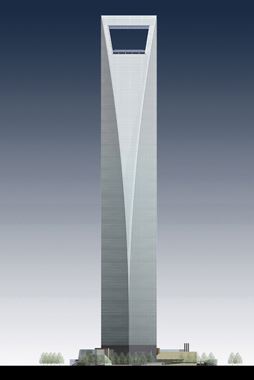
Arch @ Shanghai World Financial Center, Shanghai


Kohn Pedersen Fox Architects. Under construction, completion scheduled for 2008

Rising in the Lujiazhui financial district in Pudong, the Shanghai World Financial Center is a tower among towers. The elegant 101-story skyscraper will be (for a moment, at least) the world's tallest when completed in early 2008.

One of the biggest challenges of building tall is creating a structure that can withstand high winds. The architects devised an innovation solution to alleviate wind pressure by adding a rectangular cut-out at the building's apex. Not only does the open area help reduce the building's sway but it also will be home to the world's highest outdoor observation deck -- a 100th-floor vista that will take vertigo to new heights.

@Reena Jana + businessweek.com

Arch @ Beijing International Airport, Beijing


Foster & Partners. Under construction, to be completed in late 2007

According to the U.S. Embassy to China, the country will be building 108 new airports between 2004 and 2009 -- including what will be the world's largest: the Beijing International Airport, designed by Foster & Partners. Set to open at the end of 2007, in time for the Beijing Olympics in 2008, the airport terminal will cover more than 1 million square meters, giving it a bigger footprint than the Pentagon.

It's designed to handle 43 million passengers a year initially and 55 million by 2015, figures that will probably push the new facility into the ranks of the top 10 busiest airports, going by the 2004 numbers from the Airports Council International. Given the scale and traffic, Foster & Partners focused on the traveler's experience, making sure that walking distances are short, for instance.

Building on Foster's experience designing Hong Kong's new mega-airport, the massive Chek Lap Kok, the sprawling Beijing terminal is housed under a single roof. To help passengers distinguish between different sections of the vast space, skylights cast different shades of yellow and red light across walls -- a subtle but innovative navigational aid. The architects also kept sustainability in mind: An environmental-control system reduces carbon emissions, and skylights situated on a south-east axis lessen solar heat, keeping the building cool.

@
Reena Jana+businessweek.com

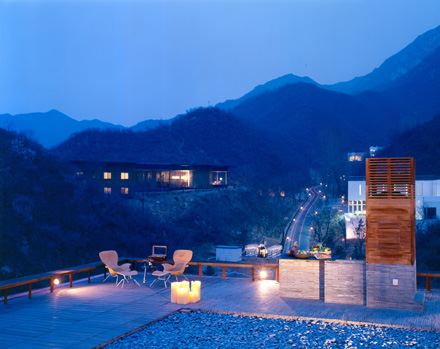
Arch @ The Commune, Beijing

Photo: Ma Xiaochun

The Commune, Beijing

First phase completed 2002, expansion scheduled for completion in 2010


Even if the Commune didn't sit beside that wonder of the ancient world, the Great Wall of China, it would still qualify as a wonder. The complex includes houses by 12 of Asia's leading architects. It was conceived by married real-estate developers Zhang Xin and Pan Shiyi, who gave each architect a $1 million budget. Shigeru Ban, the Japanese architect most famous for the paper houses he designed for refugees of the Kobe earthquake, designed the Furniture House, featuring the laminated plywood typically used for modular furniture, and China's Yung Ho Chang created the Split House, which takes the idea of a boxy dwelling, slices it in half, and spreads it out like a fan.

The Commune is now operated as a boutique hotel by the Germany luxury hotel group Kempinski, which is responsible for an upcoming expansion, which will feature 21 homes (including replications of the originals). One element will remain untouched in the new development: the Commune's private pedestrian trails, which trace untouched sections of the Great Wall.


@
Reena Jana+ businessweek.com

Arch @ 10 Wonders of the New China


It's a hotbed of innovative architecture, from diaphanous theaters to buildings heated and cooled by water
China's current building boom is doing more than sucking up the world's supply of steel -- it's creating a stage for some of today's boldest architecture and engineering. Take a tour of the 10 of the most intriguing examples.


@ Reena Jana+ businessweek.com
3.08.2006

Arch @ 安藤忠雄 先種樹 再蓋建築

安藤忠雄設計「淡路夢舞台」時,先種樹、再設計並建造建築,打破一般建築的慣例。 記者陳宛茜/攝影

「不認真規畫的城市,幾秒鐘就被破壞殆盡!」1995年,日本發生阪神大地震,災後慘況深深震撼了建築師安藤忠雄。他重新思考身為建築師的社會責任,並將理念貫徹於「淡路夢舞台」與「兵庫縣立美術館」兩件作品中,值得台灣借鏡。

阪神大地震加深安藤「建築必須融於自然環境」的建築理念。災後,他馬上加入「兵庫綠色帶」植樹活動,並成立「橄欖基金會」鼓吹植樹計畫。安藤針對台灣建築人舉辦的「安藤忠雄建築講解之旅」,都以種樹做為「到此一遊」的紀念品。

執行綠化最徹底的是安藤的「淡路夢舞台」。淡路島是阪神大地震震源所在,1998年兵庫縣政府委託安藤為此地設計飯店、植物園與國際會議館。安藤一開始就提出大膽計畫:先種樹,再蓋建築。安藤先在這35萬坪的荒地中種植高10公分的樹苗,一年後,在已形成的小樹林裡建造建築,打破傳統「先建築、後種樹」的慣例。

安藤為什麼如此重視「種樹」 他在演講中指出:「在培育樹木的過程中,參與植樹的人們也感到建設城市的責任與自豪感」。安藤認為,建築師應該提供市民參與建造城市的機會,而「種樹」便是市民可以參與的建設。綠樹可以視為一種超越物質世界的精神性建築,將城市變成一個富人情味、具連續性的城市。

兵庫縣立美術館是安藤紀念阪神大地震的另一件傑作。該館占地八千坪,是日本現今最大的美術館,1997年安藤以公開競圖的方式奪得設計權,2002年正式開放。

安藤不只設計一個美術館,更一併規畫從美術館到海邊的開放空間,包含一個可以成為逃難場所的水景公園、與大海連為一體的廣場、戶外劇場等。此外,美術館周遭環境全部綠化為一個長達一千公尺的大型公園。

對安藤而言,館外大自然與館內藝術品一般珍貴,人們必須以虔誠的心欣賞。因而他設計了一個向自然「朝聖」的空間:觀者從地下停車場沿螺旋狀階梯往上走,終點是可望見青山與大海的走廊。走廊底下是形如羅馬圓形劇場的清水混凝土空間,一旁的巨大屋簷垂下陰影,如時針般在清水混凝土上遊走,散發一種神祕而寧靜的氛圍。安藤藉這個具神聖意義的紀念空間,向自然致上深深的敬意。

@2006/03/07
聯合報+陳宛茜

3.07.2006

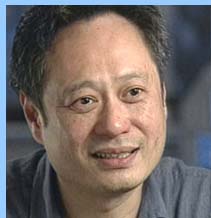
People @ Ang Lee


Dreaming up an ever-changing destiny

(CNN) -- Who would imagine that a Chinese-language kung-fu film would capture the heart of mainstream America as well as sweep up many of Hollywood's most prestigious awards?

But "Crouching Tiger, Hidden Dragon" is no ordinary martial arts movie. The dazzling fable of high-flying fighters from director Ang Lee is the latest accomplishment in a life full of breathtaking leaps: From Lee's youth as the docile son of a middle-class Taiwanese family to a master of film styles ranging from the comic to Victorian drama and suburban American angst.

"I hope I can live 300 years, and I can try all the (film) genres and mix them and twist them and learn about them," Lee said.

He has won over audiences around the world with an eclectic body of movies that share one thing in common: characters of great depth caught up in richly entertaining tales.

The 47-year-old Lee knew from an early age that a career in drama was his destiny, although his parents were not so sure.

"My father was the principal of my own high school, which is one of the best in Taiwan," Lee said. "And my mind is not in the books. I failed the college examination, (but) I got in drama school. I always loved to watch movies. ... It's apparent to me that's the only thing I do well."

Strong Chinese roots
Lee went on to study film at New York University. Although he chose to remain in the United States after graduation, his early films -- made with a low-budget production company called Good Machine -- were firmly rooted in Chinese tradition and culture.

"Pushing Hands," completed in 1992, tells the story of an aging tai chi master forced to adjust to living in America with his son, who is married to a Caucasian woman.

"The Wedding Banquet," released in 1993, is a complex comedy about a young Taiwanese-American in New York who tries to hide his homosexuality from his tradition-bound parents by agreeing to marry a Chinese woman who wants to obtain U.S. citizenship. The low-budget film was a huge hit, one of the most proportionately profitable movies of the year and an Oscar nominee for best foreign-language film.

Lee's 1994 film, "Eat Drink Man Woman," was set in Taipei and combined Lee's personal hobby -- Chinese cooking -- with an intricate story about the relationships between a widowed father and his three daughters. It also won an Academy Award nomination for best foreign-language film.

A unique sensibility
Producer and director Sydney Pollack was among those who admired "The Wedding Banquet" and "Eat Drink Man Woman."

"They both had a marvelous emotionality," he said. "They were both funny. They were touching without being maudlin or sentimental."

They were also highly original, Pollack added. When he was shopping for a director to bring the Jane Austen novel "Sense and Sensibility" to the screen, Pollack thought of Lee.

Lee initially was surprised that he would be considered as the interpreter of the classic tale of Victorian English morals. But when he read the script by actress Emma Thompson, Lee said he felt at home with the material.

The success of "Sense and Sensibility" in 1995 moved Lee from the category of "foreign-language film" director to a leading force in Hollywood.

His next film, "The Ice Storm," explored another culture and period in time -- suburban America during the post-Watergate era of the 1970s. The critical success of "The Ice Storm," followed by a U.S. Civil War film called "Ride With the Devil," showed that Lee's ability to penetrate the essence of whatever subject he tackled was no fluke.

"Lee is able to remake his style for each movie to suit the narrative needs of that movie," said Jim Poniewozik, Time magazine media critic. "In a way, he kind of suppresses his own individuality (in his movies). There's a certain humility to the way that he directs them ... to serve the greater interests of what the movie needs to be."

Midlife crisis
Lee described his desire to make a martial arts film as part childhood fantasy, part midlife crisis.

"I think that generally speaking, (at middle age) you're physically going downhill," Lee said. "I think it's just a reassessment of who you are and what life is about and you become compelled to do a lot of things. There are people who are chasing women, there are women buying new cars. I think that's my version (of a midlife crisis), just go make a martial arts film. To hell with it, you know? What can I lose? Let's see what happens."

His version of a martial arts film, of course, was something completely original: actors suspended by wires so they can fly over rooftops and ancient forests while they battle not only each other but complex inner demons.

"When I tried to raise money (for the film), what I said was, (it's) 'Sense and Sensibility' with martial arts," Lee said. "But then I had to live up to that, which is a difficult thing to live up to."

"Crouching Tiger, Hidden Dragon" was the most commercially successful foreign-language film ever made. The epic tale of kung-fu masters fighting over a legendary sword known as "The Green Destiny" was appreciated by both action junkies and the art-house crowd.

The film's many awards included the Oscar for best foreign-language film and best director awards from the Directors Guild of America and the Golden Globes.

The subject of the film Lee is planning to make next is no less surprising.

"It looks like I'm going to do the 'Incredible Hulk,' the green giant comic book character," Lee said, smiling with anticipation. "It's my new 'green destiny,' I suppose."

+ FULL NAME
Ang Lee

+ BORN
October 23, 1954, in Taiwan and raised in the southern city of T'ai-nan.

+ EDUCATION
Bachelor's degree in theater from the University of Illinois and a master's degree from New York University's Tisch School of the Arts, where he made a 1984 thesis film called "Fine Line."

+ FEATURE FILMS
"Pushing Hands" (1992); "The Wedding Banquet" (1993); "Eat Drink Man Woman" (1994); "Sense and Sensibility" (1995); "The Ice Storm" (1997); "Ride With the Devil" (1999); "Crouching Tiger, Hidden Dragon" (2000).

+ AWARDS
Best film award for "Fine Line" at NYU Film Festival; best director awards from the New York Film Critics and the National Board of Review for "Sense and Sensibility"; Directors Guild of America and Golden Globe best director awards for "Crouching Tiger, Hidden Dragon" (the film also won the best foreign-language Academy Award). Lee's work also has won many Taiwanese film awards.

+ PERSONAL
Married to Dr. Jane Lin, a microbiologist. The couple and their two sons, Haan and Mason, live in Mamaroneck, New York.


@CNN/TIME 2001

Arch @ Architect: Steven Holl

Architect: Steven Holl

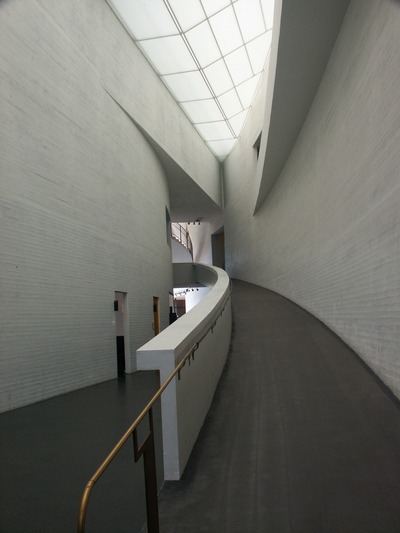
赫爾辛基現代藝術館

西雅圖大學教堂

His designs offer a new, luminous model for buildings that satisfy the spirit as well as the eye

(TIME) -- Most people see buildings as things made of steel and glass, wood and stone. Steven Holl sees them first as things made of space and light. Just as the Moors cultivated the trickle of water everywhere in their desert palaces, Holl, who grew up in the cloudy Pacific Northwest, designs buildings that cherish and supervise every sunbeam. Light gathers in the alcoves of his Bellevue Art Museum in Washington State. It sweeps across the arcs of his Museum of Contemporary Art in Helsinki. It pulses through colored glass in his Chapel of St. Ignatius in Seattle, a building he once described as "seven bottles of light in a stone box."

Holl's other signatures? One is a unique husbandry of space. Each building is not so much a discrete object as a complicated succession of vistas. He called his plan for the Helsinki museum "Chiasma, a Greek word for intertwining." That describes how the museum's curving outer section enfolds a straighter-lined companion structure. It also refers to the complicated lines of sight and movement by which his intricate design reaches out to the surrounding streets. Moving among the museum's 25 galleries, visitors wind between the two portions and upward toward a concluding level of -- what else? -- sunlight.

Holl, who teaches and practices in New York City, is famous too for a fine-fibered sense of materials. One of his organizing principles he describes "as the stone and the feather," that being his notion of how weight and weightlessness are best understood in the presence of each other. You understand them better yourself at the Chapel of St. Ignatius, where thin sheets of zinc roofing meet rough concrete walls along knife-edged junctures. The heft of the concrete accentuates the fine metal, which reciprocates by pointing up the raw mass of the heavier material.

All of Holl's principles and intuitions have culminated in his plan for a major addition to the Nelson-Atkins Museum of Art in Kansas City, Mo., scheduled for completion in 2004. This time he comes as close as possible to working in pure light -- a sequence of "light wells," translucent structures strewn across the museum grounds like giant crystal boxes, each of them admitting sunlight to galleries underground.

After decades of played-out Modernist formulas and goofy PostModern replies, we have entered a moment of exciting American architecture. Richard Meier has refined the rules of Modernism to high brilliance. Frank Gehry has exploded those same rules to make some of the great buildings of our time. Why should Holl, at 53, be counted the best of them all? Because his buildings epitomize an architecture alert to emotional needs and the spiritual properties of space. Because he conforms his designs so adroitly to their surroundings. Because he knows how to speak through understatement. For all those reasons, his work is more than beautiful. It's illuminating.

Holl's other signatures? One is a unique husbandry of space. Each building is not so much a discrete object as a complicated succession of vistas. He called his plan for the Helsinki museum "Chiasma, a Greek word for intertwining." That describes how the museum's curving outer section enfolds a straighter-lined companion structure. It also refers to the complicated lines of sight and movement by which his intricate design reaches out to the surrounding streets. Moving among the museum's 25 galleries, visitors wind between the two portions and upward toward a concluding level of -- what else? -- sunlight.

Holl, who teaches and practices in New York City, is famous too for a fine-fibered sense of materials. One of his organizing principles he describes "as the stone and the feather," that being his notion of how weight and weightlessness are best understood in the presence of each other. You understand them better yourself at the Chapel of St. Ignatius, where thin sheets of zinc roofing meet rough concrete walls along knife-edged junctures. The heft of the concrete accentuates the fine metal, which reciprocates by pointing up the raw mass of the heavier material.

All of Holl's principles and intuitions have culminated in his plan for a major addition to the Nelson-Atkins Museum of Art in Kansas City, Mo., scheduled for completion in 2004. This time he comes as close as possible to working in pure light -- a sequence of "light wells," translucent structures strewn across the museum grounds like giant crystal boxes, each of them admitting sunlight to galleries underground.

After decades of played-out Modernist formulas and goofy PostModern replies, we have entered a moment of exciting American architecture. Richard Meier has refined the rules of Modernism to high brilliance. Frank Gehry has exploded those same rules to make some of the great buildings of our time. Why should Holl, at 53, be counted the best of them all? Because his buildings epitomize an architecture alert to emotional needs and the spiritual properties of space. Because he conforms his designs so adroitly to their surroundings. Because he knows how to speak through understatement. For all those reasons, his work is more than beautiful. It's illuminating.

+ FULL NAME: Steven Holl (pronounced Hall)

+ BORN: In 1947 in Bremerton, Washington

+ EDUCATION: Honor graduate at the University of Washington architecture school in Bellevue. Holl spent his junior year studying in Rome, Italy, and did post-graduate work at the Architectural Association in London, England.

+ Professional Debut: A 400-square foot sculpture studio and pool house in New York in 1980

+ Career Highlight: Winning the Helsinki art museum competition in 1993

+ What It Takes to Stay on Top: "Enjoy the work. I try to go on vacation, and I can't because I'd rather make designs than sit on the beach"

@Time+CNN

Arch @ Steven Holl:沒有任何建築 可以取代紫禁城


美國最佳建築師 史蒂芬.霍爾:沒有任何建築 可以取代紫禁城

2008年,當參加奧運的外賓,從首都機場乘車駛上新完工的迎賓國道,在直達市中心的短短十八分鐘之間,一進入東三環時,映入眼簾的將是視覺上的一大震撼。

沿著迎賓國道,由世界前十大建築師之一、也是美國普立茲克建築獎名師的大師史蒂芬.霍爾(Steven Holl)操刀設計的當代MOMA住宅,由八棟最高達21層樓的建築物,藉著天橋連廊相接組成的大型住宅群。

當代MOMA總規劃建築面積達二十二萬平方米,其中住宅十三.五萬平方米,配套商業區有八點五萬平方米,設計靈感來自收藏於MoMA(紐約當代藝術博物館)的法國繪畫大師馬諦斯(Matisse)的名作《舞蹈》(Dance)。

去年12月底,當代MOMA以私人住宅之姿,與奧運主場館「鳥巢」等北京新公共建築,並列為美國《BusinessWeek》所評選的「中國新建築奇觀(China's New Architectural Wonders)」十大之一。

近幾年來,國際知名建築設計師紛紛相中北京,揮灑嶄新創意,霍爾便是其中之一。以光線穿透空間線條、結構,形成奇特想像見長的霍爾,2001年被《時代》雜誌選為「美國最佳建築師」,代表作包括西雅圖的貝勒育藝術博物館(Bellevue Art Museum)、芬蘭赫爾辛基的當代美術館(Kiasma)、麻省理工學院的學生宿舍西蒙斯公寓(Simmons);西雅圖聖依格那修教堂(Chapel of St. Ignatius)的彩色玻璃與建築結構,尤其顯現他引進光線投射至幾何結構空間裡的美妙。

在霍爾眼中,蛻變中的北京,是個什麼樣的城市?北京的城市規劃又有哪些遠見與挑戰?

Q(《遠見》問,以下簡稱Q):你第一次來北京是什麼時候的事?對北京的印象如何?

A(霍爾答,以下簡稱A):2001年,我為了南寧的一個案子前來中國,順道停留北京,為北大的學生演講。

我對北京的第一個印象是:非常大、非常寬廣,而且非常地隱祕,北京的生活都藏在牆裡面。

我記得現任麻省理工學院建築系系主任張永和先生,曾帶我去一家明朝風格的餐廳用餐。我只記得跟著他不停地左彎右拐,才抵達這家位在狹窄巷弄的餐廳。

這讓我非常驚訝,因為從飛機上俯瞰北京舊城區,我以為這是一座非常工整、幾何的城市;但是實際置身其中,我才發現這其實是一個巷弄蜿蜒的城市,連紫禁城也不例外!

當時對北京的印象就是,不停地左彎右拐,暈頭轉向的!

我相信北京城的格局與巷弄的設置,跟幾千年來的風水很有關係。這真是一個非常隱祕的城市(a very hidden city)!

Q:現在的北京呢?

A:我感到非常驚豔!隨著經濟成長、財富增加,北京出現了許多高樓建築;但它仍是一個巨大、街道過分寬廣、人民生活很隱祕的城市。

尤其漫步在後海(又稱十剎海)的胡同裡,你會發現一個明明直線距離很近的地點,卻得花上非常多的時間,才能沿著牆繞行過去。

建築生命不能隨奧運落幕

Q:奧運商機,似乎吸引許多外國建築師進駐北京,積極投身公共建築的設計……?

A:這是很正確的方向。例如,我很認同北京首都機場的擴建工程,因為我們對城市產生的第一印象,就是來自機場,這是非常值得花錢的地方!是正確的決策!

不過,北京為了奧運蓋了很多場館,我認為應該想一想,2008年10月,奧運結束後,北京會怎麼樣?

我去過許多辦過世界博覽會、奧運的城市,我認為更重要的是,去思考這些建築物接下來的日子怎麼辦?因為這些因應奧運而生的新建築一蓋好,你就得盯著它們一看十幾、二十年。

Q:據你觀察,北京的奧運建築群有什麼問題?

A:那些奧運場館的建築群太多、離市中心太遠,而且彼此之間也太孤立。

每棟建築場館之間,甚至是奧運村與北京市中心之間,都欠缺汽車以外的人行道、連廊、公共交通連結。順帶一提,北京必須限制汽車數量!塞車實在太嚴重了!(搖頭)我不知道北京市政府對奧運場館的未來運用有何規劃,所以我不便多所置喙;但是這些場館之間彼此缺乏聯繫,也沒有從體貼行人的角度去考量設計,確實是很大的問題。

天際中再現胡同精神

Q:你很在乎連結,這就是你之所以設計當代MOMA八棟建築,以天橋連廊相接的原始精神嗎?

A:沒錯,我將當代MOMA的八棟建築物,以連廊相接,並且在其中設置百貨公司、購物中心、電影院、健身房、餐廳等設施,一切都在步行距離內,住戶不必開車,就能享受所有生活機能。

我認為,這就是二十一世紀的人們最需要的居住需求:從擁擠的塞車車陣中解脫!遠離車海!

這幾棟建築物像是馬諦斯所畫的《舞者》一樣,讓人們手牽手連結在一起舞動。

+ http://www.stevenholl.com/

@遠見雜誌2006.03+林孟儀

Arch @ 北京變臉 誰能取代 紫禁城?


2兆台幣.10大名師.7大奇景 北京正在變臉

趕在2008年奧運聖火入城前,北京耗資2兆台幣、聚集全球前十大建築師、秀出建築七奇景,齊力要將這半個台灣大的巨龍之首,打造成地平線上最奪目的競技舞台。

向以紫禁城的銘黃琉璃瓦、與朱紅高牆的素顏,形成世人強烈第一印象的北京,如何妝點自己?是京劇小旦還是西方名伶?又來不來得及粉墨登場?

這場變臉運動,也使得標誌著舊北京文化的老胡同,在保與拆之間,成為最熱的論戰標靶。

2006年1月1日凌晨,天安門廣場上,奧運倒數電子計時鐘的數字,瞬間跳為「950天」,代表中國大陸籌辦2008年奧運各項準備工程,進入緊鑼密鼓的完工階段。

當台北101大樓、上海黃埔江畔大放跨年煙火,北京正以二十四小時不停工的大小吊車與堆土機,迎接新年的到來。

現在到北京旅遊,就像是闖進後台化妝室般不合時宜,因為你會瞧見梳妝打扮得厲害、卻還沒定妝,眉毛只畫了一半、粉也只撲了一層的北京。

在全中國,甚至全世界,目前最如火如荼進行工程建設的城市,當推北京。因為2008年,就是北京引頸企盼的「showtime(表演時刻)」。

距2008奧運剩下兩年半的時間,自1267年成為元大都起,已有八百五十年建都史,向以紫禁城的銘黃琉璃瓦、與朱紅高牆的素顏,形成世人強烈第一印象的北京,如何妝點自己?應扮成京劇小旦還是西方名伶?來不來得及粉墨登場?

全球最新焦點從上海轉到北京建築奇觀

二十一世紀的世界級新建築,正在北京大規模崛起。

美國《BusinessWeek》去年底選出「中國新十大建築奇觀」(China’s New Architectural Wonders),北京壓倒性地奪得七個名額,其餘三個奇觀則落在上海。北京的七個奇觀分別是:CCTV中央電視台新總部大樓、擴建中的北京首都國際機場、奧運主場館中國國家體育場「鳥巢」、奧運國家游泳館「水立方」、國家大劇院「水煮蛋」、當代MOMA住宅,及由十二個知名亞洲建築師設計的「長城腳下的公社」住宅。

熱中於興建地標性建築的北京,以五項公共建築、二項私人住宅,標新立異的奇招爭豔,一舉超越上海那以玻璃帷幕大樓為主的商業景觀,大大提高了國際上的能見度。

前國家建設部科技委員會副主任、現任全國工商聯住宅產業商會會長聶梅生指出,北京是首都,有太多掛上「國家」級的標誌性公共建築,設計表現空間大。不若上海,清一色是商業辦公大樓。

「上海只是個showroom(陳列室),是個營業場所;北京,才是真正的金庫、大掌櫃!」赴北京發展多年的台灣建築師、紅鶴顧問執行總監易介中以北京缺乏「可比性」,強調北京獨特的傲人地位。

對易介中而言,北京沒有必要跟上海比,「因為不管北京怎麼變,永遠是中國名門正室的大老婆!」

1987年中國改革開放以來,至2001年北京申奧成功之前,熱錢湧進上海十里洋場所造就的振興及繁華,一直是國際媒體的焦點。

但目前全世界的目光,已隨著奧運的火炬移轉到北京。這個深沈拘謹、雍容大氣的皇室后妃,一起身準備出場,就讓上海這個在人前長袖善舞、奢華外放的貴婦,也相形失色。2008年奧運,不僅是一場全球運動員的交鋒,也已成為頂尖建築師追逐世界目光的競技場,更是北京與上海雙城的高下之爭。

最多金投資從奧運場館蓋到住宅建築

搶在2008年奧運前,北京「建築奧運會」早已鳴槍起跑。

為了奧運,北京須建設三十一個場館,包括新建十一個場館、五十九條道路、五座橋樑,外界預估總建設額將達5000億人民幣(約新台幣2兆元)。當前全球建築投資金額最高的城市,北京當之無愧。

除了北邊的奧運建築群正日夜趕工,北京的東南西北各區,也隨處可見廣袤的大型工地,正進行建設。2005年1到9月,北京市總施工面積為一四七.八平方公里,等於有二.四個二環內北京舊城大小的建築工地,都在施工中。

不僅奧運場館完工啟用訂在2008年,規模龐大的住宅建案,也趕著將完工交屋日訂在2008年。

在北京清華大學建築系院士吳良鏞眼中,北京的建築正在快速「變大、變新、變洋」!「現在全世界哪裡像北京一樣,聚集了世界上排名前十大的建築師?」到北京發展房地產業已十年的台灣甲桂林廣告公司董事長張裕能,興奮細數每位國際級建築師的分量與北京新作。他甚至預言「中央電視台新總部大樓,將成為『新紫禁城』,而且會是二十一世紀人類最偉大的建築之一!」

最具實驗精神從世界遺產到前衛地標

北京七大建築奇觀中,唯一已經完工的公共建築,就是杵在天安門廣場斜對面、人民大會堂旁的那顆「水煮蛋」——國家大劇院。

出租車駛經這顆亮晃晃的巨蛋,師傅得意洋洋地對觀光客介紹這顆蛋:「個兒挺大的,還不錯!這看著啊!反正是比原來有變化。」但是住家有幸與水煮蛋相鄰的西郊民巷大嬸兒,卻對這個新鄰居怎麼看怎麼不順眼,「這有什麼好拍的?像個墳堆兒似的!」

不論是墳頭還是雞蛋殼,擺在斜對面黃瓦紅牆的故宮,及蘇俄式建築的人民大會堂旁,都讓這顆水煮蛋更顯前衛。

建築是文化的容器。坐擁四大世界遺產古建築——紫禁城、萬里長城、頤和園及天壇的北京,現在有太多的新建築,試圖以各自劃破天際的高分貝或古怪的造型尖叫著,掩蓋了紫禁城、天壇低調寡言的皇室風采。

出身台灣、1980年代便到大陸發展、曾設計中旅大廈四座特殊塔樓外型的建築師彭培根曾警告,洋建築師將許多不可思議的設計拿到中國,利用中國的資金,驗證新建築結構和外形設計,將來可能會留下一些因建築技術不成熟而故障不斷的隱憂。

@遠見雜誌 2006.03+林孟儀

Creation @ 創意變黃金 衝破千分之三機會

蕞爾台灣,發明大國。1996年,台灣申請專利數有4萬7055件,2005年,已達近8萬件,成長率近七成。

海外成績,更是耀眼。2004年,在美國獲准專利件數以近八千件,名列全球第三。在日本,專利申請超過三千件,奪下世界第五。台灣是世界專利大國,不容質疑。獲世界最酷發明的邰港科技螢光魚,成功打進歐美市場,營收3億5000萬元。光陽機車的八合一鎖頭,在法國、義大利、西班牙也搶下進口品牌第一。建準的微型風扇,每三台筆記型電腦,就有一台內建……。

但台灣的創新發明,能商品化成功的,只有千分之三的比例,遠遠低於平均百分之三的國際水準。專利不等於獲利。如何提升創新能力,突破千分之三魔咒? 創意變黃金,台灣缺的是什麼?
Made in Taiwan是過去式

現在流行Republic of Creation

很難相信,今年九歲、就讀小學三年級的徐捷中,在五歲念幼稚園時,就成為中華民國有史以來年紀最小的專利發明人。

臉蛋圓滾滾的徐捷中,父親是擁有三十五項發明、新型專利的「be*U」童鞋創辦人徐義權,母親陳卓雲則對色彩、設計很有一套,理所當然擔任「be*U」的設計總監。一家三口身材都很福態,但他們腦袋裡的新鮮創意,卻細膩異常。

成立五年的「be*U」專攻童鞋、童裝設計,年營收5000萬元。全省有八家分店,在台北京華城、誠品信義旗艦店都有設櫃。徐氏夫婦攜手創業,利用撕貼方便的「創意魔鬼粘」,讓小朋友把「我不想吃飯」「不要管我」「我不要睡午覺」的不同心情貼在鞋子上。甚至還可以量身定做,繡上小朋友的名字,連阿扁總統金孫趙翊安,都愛不釋「腳」。

老爸、老媽在事業上積極創新,小捷中談到引以為傲的個人發明史,口氣也很老成。他回憶說,「小時候」有一次在家裡爬木梯,因為梯腳不穩,害他差點跌倒,他腦袋左想右想,決定動手加裝支撐木架,就發明出「防止幼童摔跤的安全樓梯」。

連五歲男童都動腦申請專利,嶄露台灣的「創新經濟」正發燒。

事實上,這一家人簡直是目前台灣的縮影。因為此刻,全台灣正在瘋狂搞創新的企業與人,正愈來愈多。

敢創新,講話就大聲

「發明是一件很有趣的事,我很享受這個腦力探索過程,」在去年德國紐倫堡發明展,以「汽車鋼圈商標固定結構器」拿下金牌的陳永全,學歷僅初中肄業,十多年來在桃園龍潭靠擺小吃攤謀生計。

前年冬天,陳永全午休時,坐在店前的小板凳上發呆,馬路上一輛輛汽車晃過他眼前,看著看著,他的目光竟盯住高速運轉的車輪,一時好奇思索著,「輪圈為什麼一定要跟著輪胎轉動」?這就成了再簡單不過的發明初衷。

五十七歲的陳永全,年輕時就熟悉機械原理,他花了一個多月,動手發明出固定式鋼圈,讓輪胎中心的汽車商標,在行駛時清楚可見,一下子變成可以做戶外廣告的載具。這個創意後來取得七個國家的專利,甚至在發明展上,連福特汽車都來洽談技術授權,讓他一家老小都高興極了。

「這是比創意的年代,就算是跳蚤,也可以顛覆市場,」長期關注環保,發明利用回收紙做綠色家具用品的台灣傑出發明人協會理事長陳鴻偉,正在協助陳永全將輪胎固定鋼圈商品化。他語氣拉高了八度說:「敢創新,在世界上講話就能大聲。」

五歲小孩、初中肄業的賣麵老爹、五十九歲的生活點子王陳鴻偉……,一時間似乎愈來愈多台灣人,以「發明家」自居。

這把創新野火,正在台灣延燒,並且跨越了各個領域與階層。

R.O.C.(Creation)就是發明王國

前聯合大學校長、現任清大教授王俊秀,過去多年一直從事環保社會運動,這兩年,他竟也迷上動手搞發明。腦袋裡常常轉著嶄新念頭後,就動手設計新型的隨身環保葫蘆、環保悠遊袋。

去年,王俊秀隨同聯合大學發明團隊到德國參加紐倫堡發明展,由於台灣隊伍得了二十多個獎項,回國後他常興奮對人說,台灣人好思考、富創意、有彈性,很有機會打造為創新之島,「我覺得R.O.C.(Republic of China)要加新註解了,不只是中華民國,而且是發明王國R.O.C.(Creation)。」

政大科管所教授李仁芳,在政大商學院已經連續十年開「創新管理」的課程。

在今年2月,開學第一堂課裡,他有感而發地說,「十年前開這種課,反正只是一個理想,可以很輕鬆談。但是現在台灣已經動起來了,愈投入愈覺得挑戰很大,不是那麼容易創新,所以這堂課好像也就愈變愈嚴肅、嚴重了。」

在長期推廣創新的李仁芳教授看來,台灣過去累積三、四十年的製造優勢,現在已淪為「保二總隊」(代工毛利只有2%),大家都已覺醒要走向創意、創新。

他觀察到台灣正慢慢出現一些新的勢力、新的異類,他們在不同角落,做一些過去沒有人做的新嘗試。

「這正是台灣社會進入創新經濟的動力來源,只是目前仍不在主流,但是有向主流靠攏或被主流整編的趨勢,」李仁芳說。

@遠見雜誌2006.03+楊瑪利、楊方儒

3.06.2006

Fashion @ 奧斯卡 華麗、性感搶鏡頭

VERSACE交叉式禮服很有女人味。VERSACE提供

Dior漸層色的禮服有另一種性感。Dior提供


每一屆奧斯卡頒獎典禮比演技、比人氣,明星的禮服、行頭更少不了大車拚。女明星的禮服和珠寶行頭百看不厭,可提高奧斯卡典禮收視率,更可從中看出主流時尚趨勢。

國際級的重大典禮,因場面盛大,禮服設計的第一個特點就是要滿足「隆重」、「華麗」要件。這也是長禮服多半拖地、擺尾的原因。

性感的曲線和特殊材質,也是讓女星穿出架式的關鍵。時尚圈裡以晚禮服聞名、且經常獲女星青睞的品牌,不外乎CHANEL、Dior、YSL、GUCCI、GIORGIO ARMANI和VERSACE,各有各的擁戴者。

性感可以風情各異,裸露不是唯一法則。像今年YSL就以層層如雲蓋地的荷葉、大量的布料包住身體;GUCCI也有類似高領排扣的設計;許多女星都試過CHANEL高級訂製服,純白的立體花朵和小斗篷式的坎肩,把重點放在凸顯下半身修長的體態,古典而優雅。這樣表現端莊貴氣的禮服,胸前也不太戴珠寶飾品,完全以氣度取勝。

但像Dior、VERSACE和GIOR-GIO ARMANI,一出場總是閃亮並散發性感魅力,也有無人可及的賣相。適度裸露是必要的,一方面可展示曼妙的肌膚之美,更重要的是前胸露到後背的設計,提供了展示珠寶的「舞台」。Dior今年以「裸色風暴」為主題,搶下不少時尚版面,膽子大的女星在若有若無的膚色雪紡下,重點處以手抓花朵和漸層色作「掩飾」,性感不在話下。

VERSACE則以高衩、低胸,或因採交叉設計而刻意突出腰際春光的手法,成為不少波霸女星最愛;身材姣好的女明星也很喜歡VERSACE擅長的亮緞和雪紡材質禮服,這種猶如第二層肌膚的輕柔材質最能顯示傲人身段。

奧斯卡典禮曝光度最高的GIORGIO ARMANI,華人明星章子怡就很捧場。一字領的低胸設計或希臘女神式斜單肩式禮服即為代表作。

為了凸顯雍容大度的質感,禮服多以能見度高的純色取代太花稍的印花,這幾季復古風起,各式勾、繡、編織和鏤空的手工技法,層出競艷;最後要提醒的是,選擇禮服更要考慮內衣的搭配和適用性,才不會百密一疏,破壞整體美感。


@2006/03/06 聯合報 +袁青

Fashion @ 創意誠可貴!自信不怕衝突

有了紅色腰封和流蘇絲巾,一身黑也各有風情。記者袁青/攝影有了紅色腰封和流蘇絲巾,一身黑也各有風情。記者袁青/攝影

「倫敦的美,是來自一種衝突」,一向致力於「創意輸出」的英國,自許在藝術和時尚領域居於指標地位,展現在街頭服裝創意上,自然要以「打破所有限制」為出發點。
這個既頂戴歷史光環,同時又對主流文化提出質疑的國際城市,不同於東京的做作、紐約的自我主義,更不要說米蘭的炫耀和巴黎驕矜式的優雅。

蒼白的肌膚、湛藍的眼珠,襯著瘦扁的身形,在衣架子滿街跑的街頭,倫敦宛如歐洲最不媚俗的時尚守護者,以創意調和了大英帝國傳統和街頭文化的抗爭。
看倫敦的時尚氣氛,在前衛、叛逆和勇於混搭中,有一股捍衛古典文化的尊嚴,畢竟「什麼都協調、什麼都媚俗的環境,是穿不出新意的」。


@2006/03/06

People @ Ang Lee Earns Best-Director Oscar

Taiwanese director Ang Lee, an Oscar nominee for best director for his work on 'Brokeback Mountain,' arrives for the 78th Academy Awards Sunday, March 5, 2006, in Los Angeles. (AP Photo/Kevork Djansezian)

LOS ANGELES - Ang Lee won the Academy Award as best director Sunday for the cowboy romance "Brokeback Mountain," becoming the first Asian to win Hollywood's top honor for filmmakers.

Adept at genres from Westerns to historical romance to martial-arts pageants, Lee won his Oscar for a purely American story about two men tragically swept up in a gay romance that they conceal from their families for two decades.

"Well, I wish I knew how to quit you," Lee said, smiling and clutching his Oscar.

The characters "taught all of us who made `Brokeback Mountain' so much about not only gay men and women whose love is denied by society, but just as important the greatness of love itself."

"Brokeback Mountain" earned Lee the best-director honor at key earlier Hollywood awards, including the Directors Guild of America ceremony and the Golden Globes.

At 51, Lee scored an Oscar triumph in Hollywood unmatched even by Asia's most acclaimed filmmaker, the late Japanese master Akira Kurosawa, whose career spanned five decades. Kurosawa received an honorary Oscar in 1990, delivered a foreign-language winner with 1975's "Dersu Uzala" and was nominated for best-director for 1985's "Ran," but did not win.

Born in Taiwan, Lee first came to Hollywood's notice with the romantic charmers "The Wedding Banquet" and "Eat Drink Man Woman," which earned back-to-back Oscar nominations for foreign-language film for 1993 and 1994.

Since then, Lee has been a chameleon. He made the Jane Austen costume romance "Sense and Sensibility," a best-picture nominee; the stark American drama "The Ice Storm"; the Western "Ride With the Devil"; and the martial-arts epic "Crouching Tiger, Hidden Dragon," which won the Oscar for foreign-language film five years ago.

"Crouching Tiger" also was a best-picture and best-director nominee at the Oscars.

His "Crouching Tiger" follow-up was the comic-book adaptation "Hulk," an unusual commercial departure for the independent-minded director.

Lee joked about his commercial foray at Saturday's Independent Spirit Awards, where "Brokeback Mountain" won best picture and director. "Crouching Tiger" took the same prizes at the Spirit Awards five years earlier.

"It's been five years since the last time I stood here. Between `Crouching Tiger, Hidden Dragon' and `Brokeback Mountain,' I made `The Hulk,'" Lee said, drawing a big laugh from the Spirit Awards crowd. "But in my mind I've never left the independent spirit."

@Yahoo News

People @ 不拘泥傳統 李安拍片風格變變變

台灣知名導演中,李安可以說是最勇於嘗試的一位。從他揚明國際的第一部片子「囍宴」,一直到最近的「斷背山」,李安作品不管是取材或拍攝手法,都是風格迥異。這或許也正是造就他,一步步邁向巔峰的主要關鍵。現在就帶您回顧不同風貌的李安作品。

13年前,就是囍宴這部電影,協助李安奪下柏林影展金熊獎。電影中,李安以中國傳統家庭為背景,溫馨細膩的手法,描寫年輕一代留學生生活。而這也是李安邁向國際的第一步。

1994年,「飲食男女」延續囍宴時的樸實風格,李安巧妙將男女之情和中國人飲食文化結合在一起。接著李安,開始跳脫中國文化制約。

理性與感性,是李安轉變的開始。他把場景跨出了台灣,演員全都是英國人。這部改編自英國文學名著的電影,讓李安入圍金球獎(新聞、網站)最佳導演,但李安的創意,似乎並不因此滿足。

1997年冰風暴,以及1999年與魔鬼共騎,李安再次嘗試改變!這回他投入好萊屋式商業片的國際洪流中。

於是李安回頭想拍國片,臥虎藏龍因此誕生。這是李安導演生涯的第一個高峰,不僅將華語片成功打入國際市場,這部片子,還被喻為「中國駭客任務」。將武俠電影中使用輕功的表現手法達到頂點,讓人驚嘆。

2003年綠巨人浩克,李安開始大量使用電腦動畫,大玩美式動作特效 2005年斷背山,兩個牛仔的戀情,李安卻顛覆美國西部電影傳統,將中國山水畫的意境融入其中。

巧妙的中西融合,10多年來,李安不斷嘗試突破,也為他自己走出人生高峰。


@TVBS新聞

People @ 李安今天改寫影史

20年前友人家打地鋪 李安今天改寫影史

)「十年寒窗無人知,一舉成名天下知」是新出爐奧斯卡最佳導演李安的最佳寫照。李安一月間返台時曾透露,二十年前潦倒時曾在紐約友人家打地鋪,當時的他,對於未來感到一片茫然。曾幾何時,就在今天,李安改寫了歷史,成為奧斯卡影史上第一位榮獲最佳導演的亞洲導演。

一九五四年在台灣出生的李安,一九七三年以第一百零八個志願考進當時稱為「國立台灣藝術專科學校」的台灣藝術大學。自認是既不會K書又不會玩的他,原本打算第二年重考,但因一次舞台表演的經驗,決定繼續攻讀戲劇。

退伍後,李安到美國深造,先後畢業於伊利諾大學戲劇系導演組和紐約大學電影製作系研究所。獲得學位後的李安原本打算返台,因畢業作品為美國經紀人看好,接受建議留在美國發展。

李安不諱言「自己其實是蠻有天分的」。他說,在紐約大學攻讀電影時,同學都以他馬首是瞻,有時同學上午找他幫忙打燈,下午他就成了導演,因為大家都聽他的。李安相信自己拍片真的很有天分,而且很能與人合作、共事。

李安之所以這麼有自信,是因為基本功紮實。李安在紐約大學深造時就是一個規矩和用功的學生,任何課程都不放過,即使是許多美國同學都不聽的課程,他還耐心學習,這對李安日後都有很大的影響。

李安強調,他的「基本功之路」走了很久,在拍攝「喜宴」時,才抓到電影結構;執導「理性與感性」時才學到電影技術的基本功。

有了基本功,當機會來臨時,鋒芒就無法再掩藏了。一九九一年,李安與中影合拍的「推手」獲得金馬獎(新聞、網站)最佳電影等八項提名,次年這部電影拿下第三十八屆亞太影展最佳影片獎。

一九九三年,李安以「喜宴」抱走柏林影展金熊獎,這是他在國際影壇大放異彩的起點。「喜宴」同時獲得當年金馬獎最佳劇情片、導演、原著劇本、男女配角及觀眾票選最佳影片獎等。同年,「飲食男女」開拍。

「喜宴」和「飲食男女」先後入圍金球獎、奧斯卡最佳外語片後,李安於一九九五年再下一城,以「理性與感性」榮獲柏林影展金熊獎;這部由知名演員艾瑪湯普遜、凱特溫絲蕾和休葛蘭合演的電影,同時獲得當年奧斯卡七項提名。一九九七年李安轉戰坎城影展,以「冰風暴」抱回最佳劇本獎。

不過,影展常勝軍李安也曾經歷票房失利的窘境。一九九九年「與魔鬼共騎」叫好不叫座。二千年,李安重新出發,以武俠片「臥虎藏龍」再次橫掃世界各影展。 「臥虎藏龍」在坎城影展造成轟動,全球佳評如潮,除為李安在二零零一年拿下金球獎最佳導演獎,還獲得第七十三屆奧斯卡十項提名,最後抱走最佳藝術指導、攝影、電影音樂、外語片獎;同時還獲英國電影獎最佳外語片獎。但奧斯卡「最佳導演」始終與他無緣。

李安拍完「臥虎藏龍」和「綠巨人浩克」後,心力交瘁,一度萌生去意。在父親李昇鼓勵下重新出發,終於以「斷背山」再創事業高峰。

父親李昇是影響李安一生最重要的人。李安早年走電影路並不順遂,曾擔任台南一中校長的父親李昇,由於堅持讀書人傳統,曾反對李安朝戲劇發展,但在李安處於最低潮的時候,父親李昇卻成為力挺李安堅持下去的一股力量。但遺憾的是,李昇在兩年前過世,未能看到李安在全球影壇為華人爭光。

曾與奧斯卡最佳導演獎擦身而過的李安,堅持理想,再創佳作「斷背山」,他很有自信地「等待」,今天再度登上奧斯卡頒獎台,拿到應屬於他的最佳導演獎。

李安在領獎後不改自信本色地說:「得最佳導演獎是意料中事」,因為大家都認為是他應得的,但「斷背山」未獲「最佳影片獎」倒是令人意外,因為這部戲所有工作人員表現都非常好。他的成就是眾人努力的成果,因此要與全體工作人員分享這個獎座。


@中央社 +黃慧敏

3.05.2006

Fashion @ 巴黎時裝周 黑白香奈兒 神秘浪漫


香奈兒的黑色洋裝,胸口有鑽石般的裝飾,是目光焦點。(歐新社)

巴黎時裝周,香奈兒的創意總監拉格斐三日以戲劇化的方式設計走秀,把透明屋頂的巴黎大皇宮變成一座劇場。新作品以黑白基調,多層次的感覺,襯托出暗香浮動,飄逸如煙的女性魅力。
無論是充滿柔媚的白色洋裝,擺盪的長裙或是寬大的喇叭褲,穿著它們出場的模特兒,都有一種飄起來的感覺。大多數的鞋子都看不到;一個接一個出場的模特兒,有如朵朵飄在水上的花。此外,儘管是短裙、短皮褲,拉格斐還是給她們搭上多縐褶、雪紡下襬的長外套,增加流動的氣息。閃閃的亮片,則使以黑、白色調為主的衣服變得亮起來。

同時為香奈兒、Fendi和自己品牌操刀的拉格斐說:「我在新作裡加入了新的比例。讓她們走動起來時感覺特別的棒。晚裝富有神秘,浪漫色彩;還帶著一些些的憂鬱。我覺得很優雅。」
拉克華則推出色彩豐富的新裝。模特兒穿著閃亮的洋裝,從鬥牛士那裡得來靈感的外套,或是綴有流蘇、飾有刺繡的外衣。拉克華說,鬥牛士服裝向來是他創作的靈感泉源。
麥克昆無懼禽流感,以鳥羽為令人充滿疑惑的2006年秋冬,帶來展翅飛翔的慾望。比翼連襟的翅膀頭飾栩栩如生,波動如羽的衣服下擺,彷彿人鳥合一。另一個場景,模特兒穿著白色蕾絲洋裝,披著如瀑布般的大幅面紗,更增添夢幻森林的感覺。

回到平凡的人間世後,麥克昆以紅格子圖案的高腰裙、短外套讓人們在日常生活裡更容易接受他的新裝。但是,少不了的,還是一頂羽毛的貝雷帽。

@2006/03/05 民生報+朱錦華

3.02.2006

Fashion @ 班尼頓 打造春夏民族風情


富有民族色彩的洋裝,讓班尼頓春夏服飾充滿異國風情。圖/班尼頓提供

活潑熱情的鼓聲咚咚,為班尼頓(United Colors of Benetton)春夏新裝揭開序幕,展現出一貫玩顏色風格,服飾滲透著城市春日情懷。
班尼頓春夏女裝,以輕鬆活潑的魅力為題營造出年輕非凡,採用麻、棉、緞、平紋細布和薄紗等材質,搭配多樣化的顏色,為女性打造出百變造型。而在褲裝的剪裁上,以特殊緊腰設計來突顯臀部線條,為女性增添一份柔媚感。
最令人驚豔的是衣料及裝飾,包括:東方絲綢、彩色刺繡、耀眼的印第安小珠,或叮噹做響的皮腰帶,讓女性走起路來婀娜多姿、儀態萬千,顏色上則運用鮮紫、番紅及杏色為主。
另外,永不退流行的牛仔褲布料,班尼頓同樣運用了褪色牛仔布,可以長袍配搭,或是富有民族色彩的摩洛哥刺繡上衣長袍。
此外,楔型鞋也將在春夏獨領風騷,無論是編織草紋或是飾以花朵,都讓足上風光更顯輕盈。


@2006/03/02 聯合報+張媛姍、邱玉婷

Search+